

Cultural Etiquette in the Pacific Islands: Do’s and Don’ts for Travelers
Good cultural etiquette in the Pacific Islands begins with one simple habit: let local people guide you. A village visit, a church service, and a resort beach may call for different behavior, even within the same country. Approach each place with curiosity, patience, and respect, and ask before acting when you are unsure.
Start with respect—and avoid treating the Pacific as one culture
Pacific Island customs vary by country, island, community, and setting, so there is no single etiquette rulebook for the region. Ask your local host what is appropriate, then follow their guidance rather than relying on assumptions.
The Pacific includes many distinct communities and traditions. Practices in Fiji may differ from those in Samoa, Tonga, Vanuatu, the Cook Islands, or Papua New Guinea; customs can also vary between neighboring villages. Language, faith, family relationships, chiefly systems, and local protocols all shape how visitors are welcomed.
Think of etiquette as a place-and-person check: notice where you are, who is hosting you, and what the occasion calls for. A casual greeting on a public waterfront may be fine, while entering a village or attending a community event may require an introduction or invitation. Ask a guide, accommodation host, or community representative before you go.
Curiosity is welcome when expressed considerately. Avoid treating customs as spectacles or describing them as strange or inconvenient. If you make a small mistake, a sincere apology and willingness to adjust usually matter more than trying to defend your intentions.
Greetings, introductions, and village visits
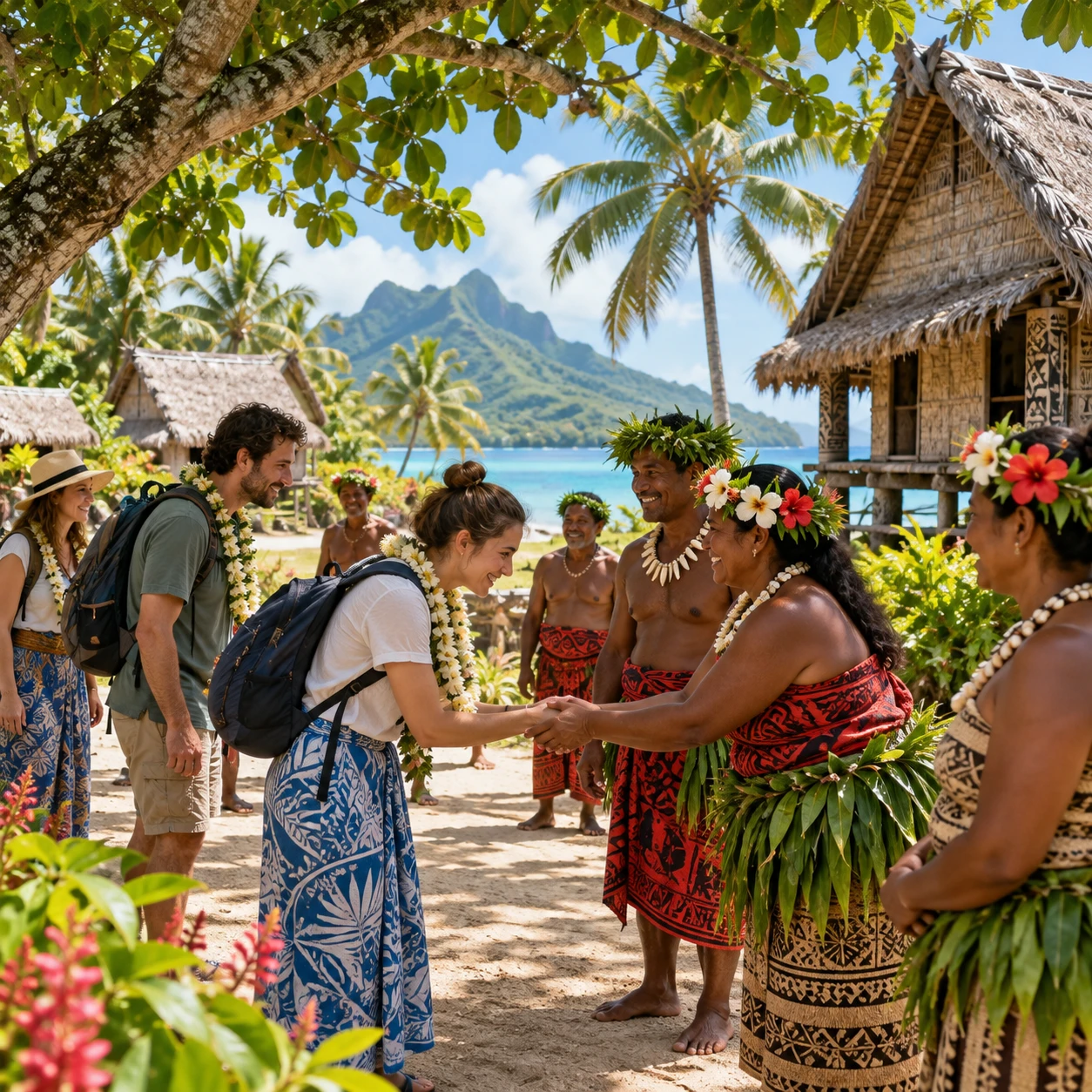
For village visits, greet people politely, acknowledge your host, and wait for guidance before walking around or joining an activity. A warm hello and a little patience are safer than assuming you can enter or explore freely.
When someone arranges your visit, stay with that person or the local guide unless they invite you to move on your own. Ask where to meet, whether a customary greeting is expected, and if there is a visitor protocol, such as a welcome or presentation. In some communities, a formal introduction or gift may be appropriate; in others, it may not be needed. Follow local advice.
Use a calm, friendly manner and allow your host to set the pace. Learn a few words of greeting if a reliable local source can teach you the right pronunciation. A handshake may be common in one setting and unfamiliar in another, so let residents initiate physical contact. If people are busy, do not insist on a conversation or treat a private home as an open attraction.
- Do: arrive at the agreed time, greet your host, and listen to instructions.
- Do: ask before entering homes, work areas, or gathering spaces.
- Don’t: wander through a village, handle belongings, or interrupt a meeting without permission.
Dress appropriately for the place and occasion
Modest dress is a considerate choice in many villages, religious settings, and community gatherings. Cover your shoulders and thighs when local hosts recommend it, and bring a light wrap or extra layer so you can adapt.
Clothing expectations differ, and beachwear that is ordinary at a resort may feel out of place in a village, church, or formal event. Before a visit, ask whether visitors should wear covered shoulders, longer shorts or a skirt, or particular clothing for a service. Choose clean, comfortable garments that allow you to follow the local standard without drawing attention.
Some places may ask visitors to remove shoes before entering a home or building. Watch what your host does, or ask before stepping inside. If you are attending worship, dress with the same care you would show at a religious service elsewhere; avoid assuming that every faith community or island has identical expectations.
There is a practical trade-off: light, quick-drying clothing suits warm weather, while more coverage can show respect in shared community spaces. A thin shirt, sarong, or scarf takes little room and gives you options. Local guidance should settle any uncertainty.
Sacred sites, ceremonies, and community events
At sacred sites, ceremonies, and community events, observe quietly and follow the instructions of local hosts. Some places have limits on access, clothing, movement, or photography, and those restrictions take priority over a visitor’s plans.
Ask whether a site is open to visitors before entering. Sacred places may include churches, burial grounds, ancestral sites, meeting houses, or areas with cultural significance that is not obvious to an outsider. Do not touch objects, cross barriers, climb on structures, or remove natural materials unless you have clear permission.
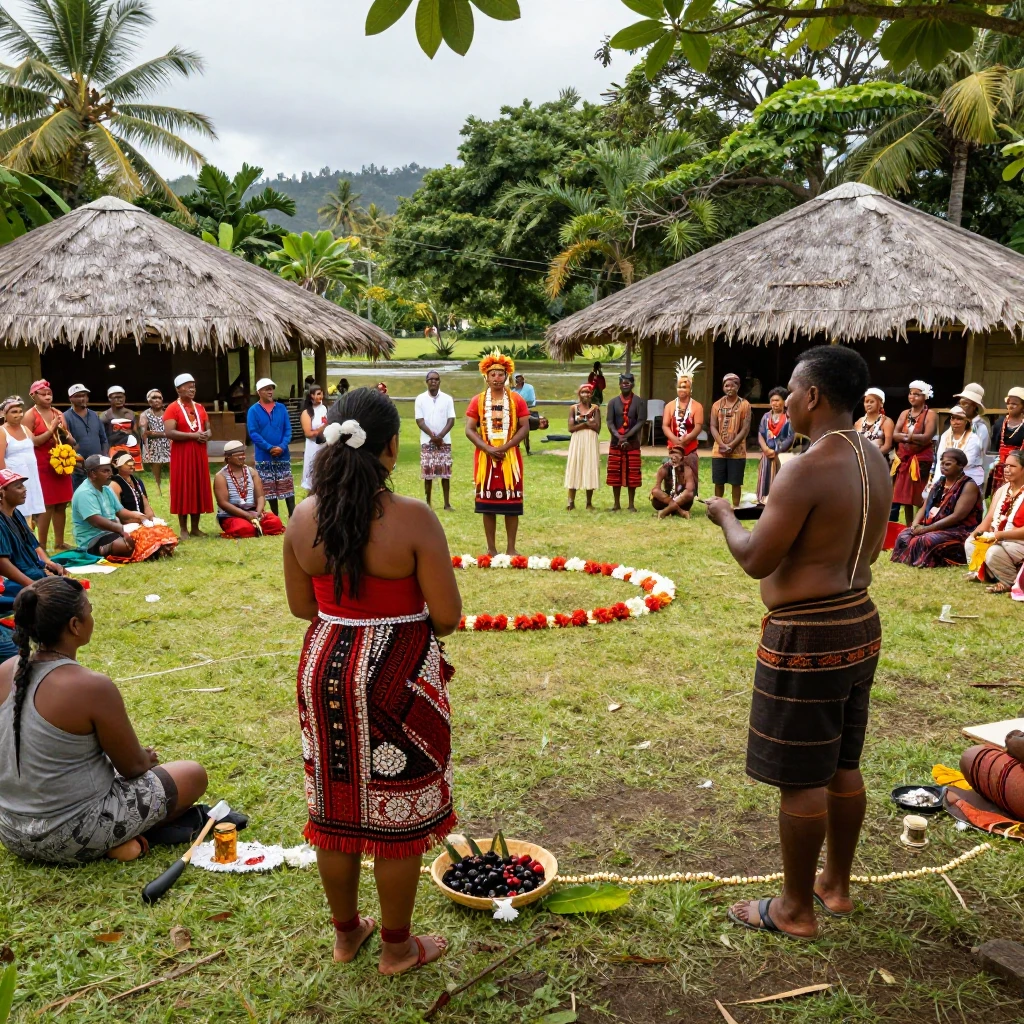
For a ceremony or community event, find out where visitors may sit or stand, when to arrive, and whether participation is welcome. If invited to join, follow the host’s lead rather than copying a gesture you do not understand. Keep phones silent, avoid talking over speakers or performers, and do not expect every gathering to be staged for tourists.
When an event is private or a site is closed, accept the boundary without pressing for an exception. Respectful observation sometimes means staying outside or not attending at all. That may limit what you see, but it preserves the community’s right to decide how its traditions are shared.
Photography, permission, and personal space
Ask before photographing people, homes, or cultural activities, and respect a no without negotiation. Permission should be clear and specific, especially at sacred sites, ceremonies, and private community events.
A person’s presence in a public place does not automatically mean they welcome a close-up photograph. Smile, gesture toward your camera, and wait for an answer. If someone declines, lower the camera and move on. For children, ask a parent or guardian, and avoid photographing people in vulnerable or private situations.
Homes and community spaces also deserve care. Ask before taking pictures inside, of personal belongings, or of work and rituals. Permission to attend an event does not necessarily include permission to record it. Check whether video, flash, or posting images online is allowed; some hosts may agree to a photograph but prefer it not be shared.
Give people room to move and speak without a camera close to their face. When in doubt, take a landscape or scenery photo without identifiable people, or leave the camera in your bag. A memorable image is never more important than someone’s comfort.
Common do’s and don’ts for a considerate visit
A considerate visitor listens first, asks permission, and adapts to local guidance. Small choices—such as waiting for an introduction or covering up for a village visit—help local hosts feel respected.
- Do ask: check what to wear, where to go, and whether a greeting, contribution, or gift is appropriate.
- Do follow: accept a host’s directions about sacred sites, ceremonies, photography, and community events.
- Do give thoughtfully: if your host suggests a gift, ask what is suitable and offer it discreetly. Avoid assuming that money or a particular item is expected.
- Do show gratitude: thank your hosts, respect agreed visit times, and follow through on any arrangements.
- Don’t assume: one island’s custom applies everywhere, or that an invitation to one space grants access to another.
- Don’t press: avoid intrusive questions about family, faith, land, or local politics unless your host opens the conversation.
- Don’t treat people as scenery: avoid unsolicited photos, loud behavior, and interrupting community activities.
Gift-giving deserves particular care. A small token can be a kind gesture when a host recommends it, but an unrequested gift may create awkwardness or suggest an expectation in return. Ask your guide what is customary, and never frame a gift as payment for access to a person, home, or ceremony.
The most useful rule is also the simplest: ask locally, then follow through. Respectful travel does not require knowing every custom in advance. It requires noticing that communities have their own protocols and giving local people the final say in how visitors take part.