
Local Cuisine Guide: Must-Try Foods in Hawaii
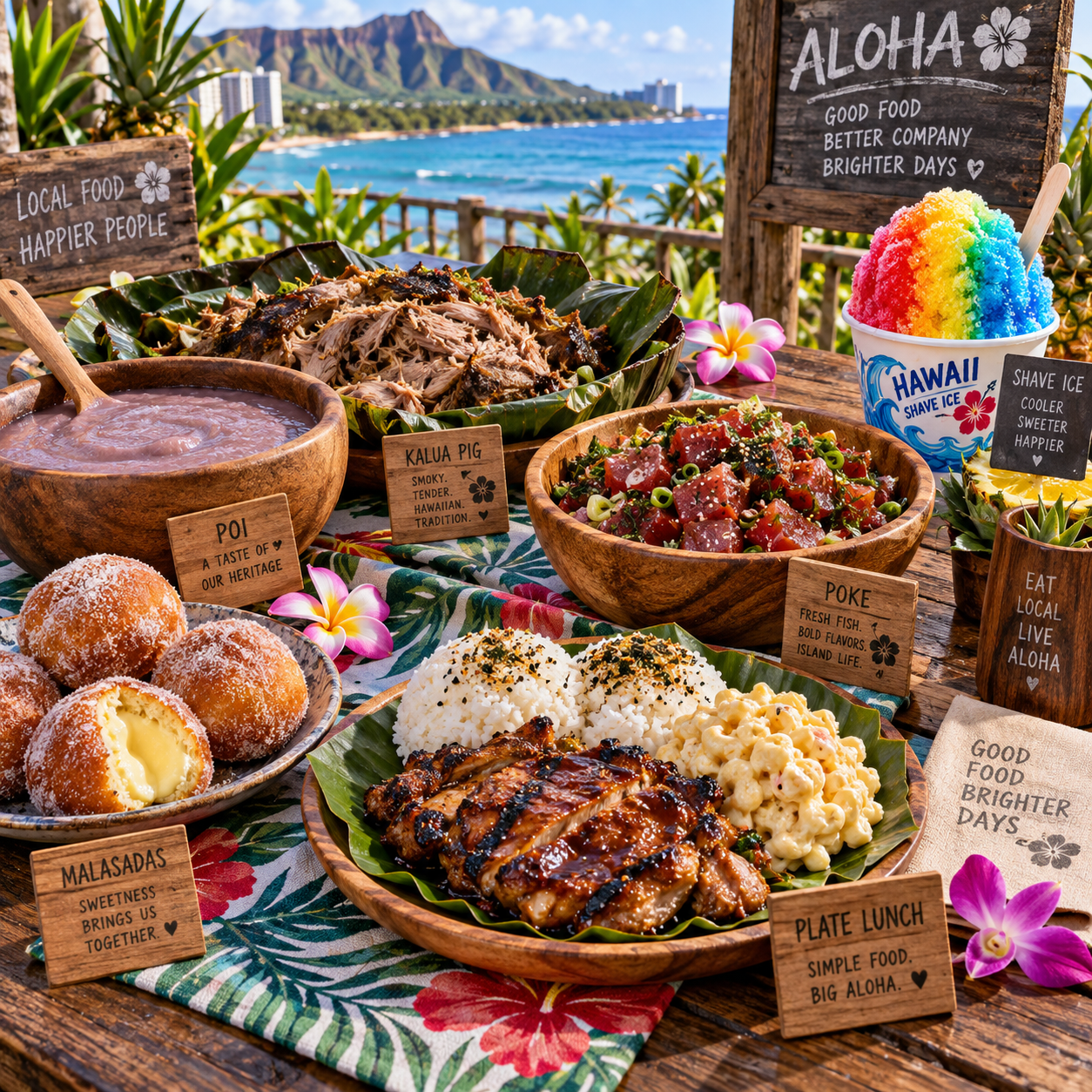
Hawaii’s food scene brings together Native Hawaiian traditions and generations of influences from across the Pacific and beyond. A single day of eating might include taro-based poi, a Japanese-inspired Spam musubi, and a plate lunch shaped by the islands’ plantation-era communities.
For travelers, the best approach is to sample broadly and ask what a dish means to the person serving it. The terms Hawaiian food and local food are related, but they do not mean the same thing.
What to Know About Hawaii’s Food Culture
Hawaii’s food culture includes traditional Native Hawaiian foods as well as local favorites shaped by many communities. Knowing the difference helps you understand what you are eating and why the menu can vary from island to island.
Traditional Hawaiian food refers to foods and practices rooted in Native Hawaiian culture, including poi and kalua pig. “Local food” is a broader everyday term for the dishes people across Hawaii have made their own. It can include influences from Japanese, Chinese, Filipino, Portuguese, Korean, and other cuisines, alongside contemporary cooking.
That mix developed over generations, particularly as immigrant communities worked on the islands’ plantations and brought their ingredients and cooking traditions with them. The result is not one fixed menu. Recipes and preferences shift between families, neighborhoods, and islands; even a familiar dish may appear in several forms.
Food also carries cultural meaning. Poi, for example, is connected to taro, or kalo, a plant with deep importance in Native Hawaiian culture. Enjoying a dish respectfully means being curious without treating cultural practices as a performance. If you are unsure what something is, ask the cook or vendor; many will be glad to explain.
Traditional Hawaiian Foods to Try
Start with poi and kalua pig to experience two well-known parts of traditional Hawaiian food. Poi is made from cooked, pounded taro, while kalua pig is traditionally cooked in an underground oven called an imu.
Poi has a smooth, thick texture and a mild, earthy, slightly tangy flavor. Its taste can vary with its freshness and fermentation, so it may seem subtle or more sour than expected. It is often served alongside other foods, where its gentle flavor offers a contrast to savory dishes. Try a small taste first, then decide whether you prefer it on its own or with a bite of meat or fish.
Kalua pig gets its name from the cooking method: food cooked in an imu, an earth oven. Traditionally, the pig is seasoned, wrapped, and slow-cooked in the ground, producing tender meat with a smoky flavor. Some restaurants and gatherings use other cooking methods, so the texture and smokiness can differ. Look for it at Hawaiian food counters, community events, or menus featuring traditional dishes.
These foods are often served as part of a larger meal. You may see kalua pig with poi, lomi salmon, or other sides, but combinations vary. There is no single mandatory plate, and a menu’s version may reflect a family or a particular setting.
Everyday Local Favorites
Poke, loco moco, plate lunch, and Spam musubi are everyday local favorites that show how varied Hawaii’s food scene can be. They range from seafood served simply to hearty meals and portable snacks.
Poke (pronounced poh-kay) is typically cubed fish, often ahi tuna, seasoned with ingredients such as shoyu, sesame oil, seaweed, or green onion. Traditional preparations and modern variations differ, and some poke counters offer cooked or plant-based options. Ask how the fish is prepared and whether it is served raw, especially if you have dietary or food-safety concerns. Buy it from a reputable shop that keeps seafood properly chilled.
Loco moco is a filling comfort-food combination: rice topped with a hamburger patty, brown gravy, and a fried egg. Some versions add extras or swap components, but the classic is rich and substantial. If you want to try it without committing to a large meal, ask whether the kitchen offers a smaller portion.
A plate lunch usually features a main dish with rice and macaroni salad, though sides and portions vary. It may include teriyaki chicken, fried fish, kalua pig, or another protein. This is a practical way to sample a full local-style meal, but portions can be generous, so consider sharing or saving some for later.
Spam musubi pairs a slice of grilled Spam, often glazed with a sweet-savory sauce, with rice and nori. It is compact and easy to carry, making it a common grab-and-go choice at convenience stores, bakeries, and markets. It is also salty and filling, so one can work well as a snack rather than a side dish.
Sweet Treats and Island Snacks
Malasadas and shave ice are two easy-to-find treats that make good stops between meals. One is a warm, sugar-coated pastry; the other is finely shaved ice served with flavored syrups and optional toppings.
Malasadas are Portuguese-style fried doughnuts that became a familiar local treat in Hawaii. They are often rolled in sugar and may be filled with custard, cream, or other fillings. Freshly made ones are especially tender, though filled versions can be messier to eat on the go. Ask which fillings are available that day.
Shave ice is made from finely shaved ice that absorbs flavored syrup. Depending on the shop, you can add options such as ice cream, sweetened beans, or condensed milk. It is different from crunchy, coarser snow cones: the fine texture helps distribute the syrup through the ice. Start with two or three flavors if you want to taste each clearly, and check whether toppings contain dairy or other allergens.
Where to Find These Foods on Your Trip
You can find Hawaii’s must-try foods at Hawaiian food counters, neighborhood restaurants, markets, bakeries, and food trucks. Rather than chasing a single “best” venue, look for places that fit the dish and serve it freshly.
Try these practical cues as you plan meals:
- For poke: Visit a busy seafood counter or market with clear refrigeration and active turnover. Ask which fish is available and how it is seasoned.
- For plate lunch or loco moco: Look for casual lunch spots and local diners. Check the portion size before ordering if you are not very hungry.
- For kalua pig and poi: Seek out Hawaiian food restaurants, buffet-style counters, or cultural and community gatherings where these dishes appear on the menu.
- For malasadas: Bakeries and specialty pastry shops are good places to ask about fresh batches and filling choices.
- For shave ice: Shave-ice shops are common in visitor areas and local communities; ask which syrups and toppings are made in-house.
Markets and food trucks can be rewarding places to sample regional specialties, but hours, menus, and availability change. Check current opening information before making a special trip. If a particular dish is your priority, ask a local host or staff member where it is served nearby rather than assuming every restaurant carries it.
Tips for Ordering and Exploring
To explore Hawaii’s food with confidence, ask about ingredients, preparation, portion size, and local variations before ordering. A few simple questions help you choose food that suits your appetite, preferences, and dietary needs.
Use this quick ordering checklist:
- Ask what is in the dish. Sauces, marinades, and toppings may include soy, sesame, seafood, or dairy.
- Check how it is prepared. Poke is often raw, while other versions may use cooked ingredients. If you have a health concern, clarify before ordering.
- Confirm portion size. Plate lunches and loco moco can be filling. Sharing is a sensible option if you want room to sample several foods.
- Stay open to variations. A cook’s version may differ from what you have seen elsewhere; ask what makes this one distinctive.
- Respect cultural context. If you encounter food at a community or cultural event, follow the host’s guidance and ask questions politely.
One common mistake is assuming every dish labeled “Hawaiian” is a traditional Native Hawaiian food. Check the menu description or ask how the dish is categorized. Another is ordering several large plates at once; try one substantial meal, then add smaller snacks such as Spam musubi or shave ice as appetite allows.
Most of all, treat the menu as an invitation to learn. Try poi even if its texture is unfamiliar, taste kalua pig alongside its sides, and compare a classic plate lunch with a seafood-focused meal. You will come away with a better sense of Hawaii’s food culture than any single dish can provide.
Frequently Asked Questions About Hawaii’s Food
These quick answers clarify common questions about traditional Hawaiian dishes and local favorites. They can help you choose what to order and know what to expect.
What is the difference between Hawaiian food and local food?
Hawaiian food generally refers to Native Hawaiian culinary traditions and dishes such as poi and kalua pig. Local food is a broader category that includes everyday favorites shaped by the islands’ many communities, such as plate lunch and Spam musubi.
Which Hawaii foods are best for first-time visitors?
Start with poke, a plate lunch, Spam musubi, and shave ice for a cross-section of familiar local favorites. Add poi or kalua pig to explore traditional Hawaiian foods, and try a malasada if you enjoy pastries.
Is poi sweet or savory?
Poi is usually mild and earthy, with a texture like a thick paste. Its flavor can be slightly tangy, especially as it ferments, and it is commonly eaten alongside savory foods.
What is usually included in a plate lunch?
A plate lunch commonly includes a main dish, rice, and macaroni salad. The protein and sides vary by restaurant, so check the menu for the specific combination and portion size.