
Best Snorkeling and Diving Spots in the Great Barrier Reef
The Great Barrier Reef stretches across a vast area, so a reef trip from Cairns can feel very different from one based near the Whitsunday Islands. Some sites suit a first snorkel over shallow coral; others offer scuba diving on deeper reef walls. Choosing the right spot comes down to where you are staying, how you want to explore, and what the day’s conditions allow.
How to Choose a Great Barrier Reef Spot
Choose a Great Barrier Reef spot by balancing your departure point, travel time, sea conditions, and preferred activity. The best match is the one that offers suitable access and depth for your plans, rather than a famous site name alone.
Start with geography. Cairns and Port Douglas are common mainland bases for trips to northern reef systems, while the Whitsunday Islands provide access to reefs farther south. Operators may visit different sites depending on weather, tides, and operational plans, so check the itinerary and ask whether the destination is confirmed or subject to change.
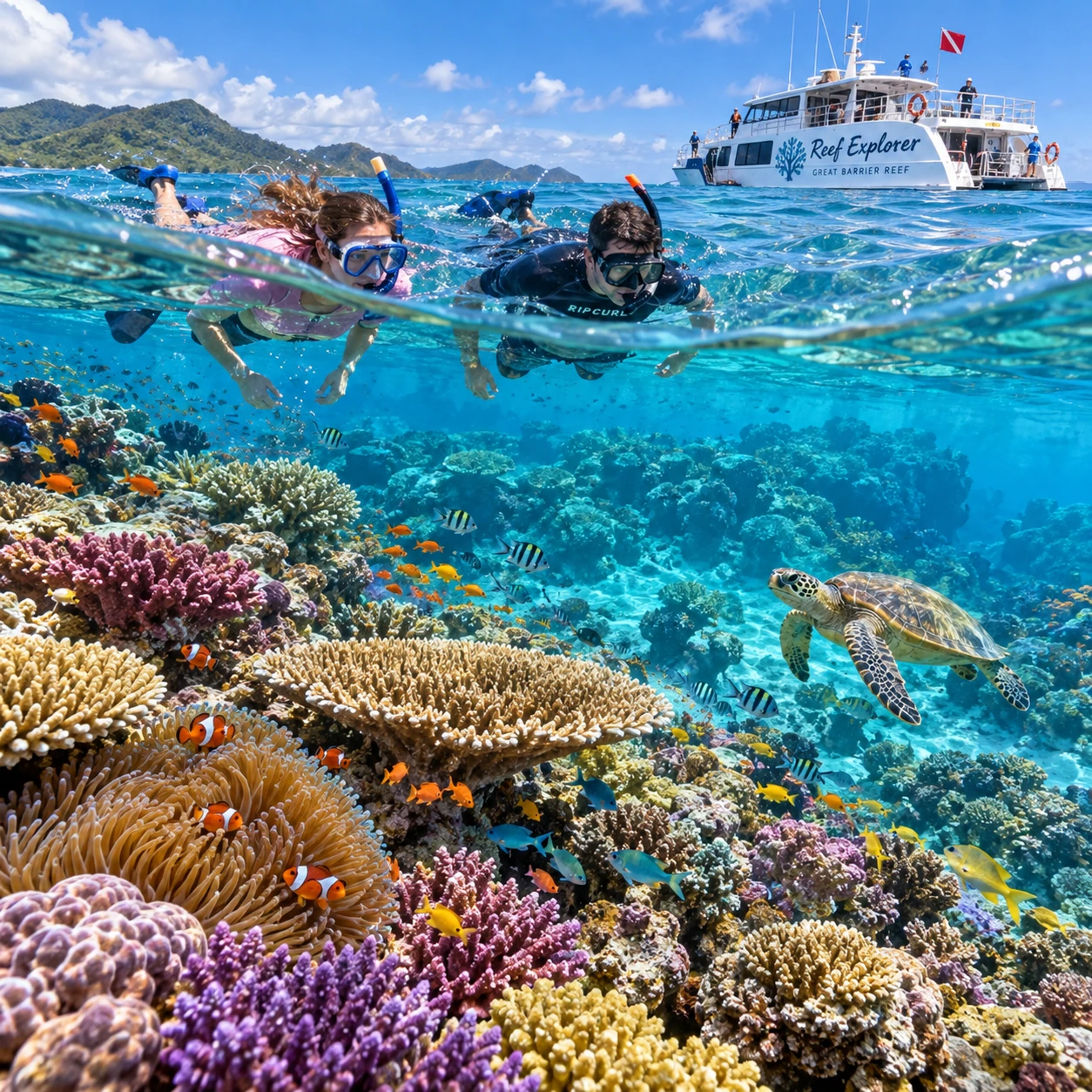
Next, decide how you want to experience the reef. Snorkeling lets you look down on coral and fish from the surface, often in shallow areas that are approachable for newcomers. Scuba diving takes you below the surface and can reveal reef structures that snorkelers cannot reach, but it requires appropriate training or a supervised introductory dive.
Also consider the journey. Outer reef trips can involve longer boat rides than visits to closer reefs, and open-water conditions may feel more exposed. Look for an operator that explains transfer times, provides flotation aids, and offers options such as guided snorkels, introductory dives, or an underwater viewing area if you prefer to stay dry.
Cairns and Port Douglas Reef Trips
Cairns and Port Douglas are convenient mainland bases for day trips to the northern Great Barrier Reef. Both offer boat-based access to inner and outer reef locations, though the specific sites and journey times vary by operator.
Cairns has a broad choice of reef tours, from larger vessels with facilities for mixed-ability groups to smaller outings focused on particular activities. It can be a practical base if you want to compare operators or combine a reef day with other coastal activities. Trips may visit pontoons or moorings on the outer reef, where snorkeling and scuba diving can take place at several nearby sites.
Port Douglas is another useful departure point, especially for trips to Agincourt Reef. These reef sites sit along the outer edge of the continental shelf and are known for clear-water reef scenery when conditions cooperate. A trip may include time at more than one site, which gives snorkelers a chance to explore different coral formations without changing boats.
The trade-off is that no mainland departure guarantees calm seas or a particular visibility level. Compare the operator’s planned reef area, time on site, group size, and available support. For an overview of the reef’s protected-area management, consult the Great Barrier Reef Marine Park Authority.
Outer Reef Spots for Snorkeling and Diving
Outer reef spots appeal to travelers seeking a more open-water reef setting, with opportunities for both snorkeling and scuba diving. They often offer varied coral habitats, but travel time and conditions can make the experience less predictable than a sheltered, close-to-shore visit.
Agincourt Reef, reached on many trips from Port Douglas, is a well-known outer reef destination. Depending on the site and conditions, snorkelers may explore shallow coral areas while certified divers descend to deeper sections. It is a good option to consider if your group wants to share a boat day but pursue different activities.
At outer reef moorings, snorkelers generally stay near the surface and follow the boundaries set by the crew. A flotation vest can help conserve energy, and a guide can point out reef features without requiring you to dive down. Scuba divers, by contrast, may follow a planned route with a dive professional or dive buddy, subject to their certification and the operator’s rules.
Visibility, currents, and marine life vary with weather, tide, and season. No operator can promise a particular animal encounter, and a site that looks vivid in promotional photos may appear different on the day. Bring reef-safe expectations: enjoy the habitat you see, keep a respectful distance from wildlife, and never touch coral.
Whitsunday Islands and Hardy Reef
The Whitsunday Islands offer an island-based way to explore the central Great Barrier Reef, while Hardy Reef is a major reef destination for day trips from the region. This area suits travelers who want to pair an island stay or sailing trip with time on the reef.
From Airlie Beach and nearby island resorts, operators run a range of excursions, including fast-boat trips and sailing experiences. The exact route matters: some tours focus on beaches and island scenery, while others dedicate more time to reef activities. Check whether snorkeling is included, how long you will spend at the reef, and whether scuba diving is available as an add-on.
Hardy Reef is visited by tour vessels and is associated with pontoons that provide a stable base for reef activities. A pontoon can make a reef day easier for mixed groups, since snorkelers can enter from a platform and non-swimmers may have access to other viewing options. Divers can book guided or certified dives when offered by the operator.
Compared with Cairns or Port Douglas, the Whitsunday route may fit best when your accommodation is already in the islands or Airlie Beach area. The journey can still be substantial, and sea conditions affect comfort. If reef time is your main priority, choose a tour with a clear reef itinerary rather than assuming every island cruise spends significant time at Hardy Reef.
Spots for Different Experience Levels
Beginners can enjoy the Great Barrier Reef without scuba certification, while certified divers can choose trips with deeper guided dives. Match the activity to your comfort in the water, and tell the operator about any concerns before departure.
For a first snorkel, look for a trip with a guided option, flotation equipment, and an easy-entry platform or sheltered area when available. A snorkel lesson or crew briefing can help you get comfortable with the mask and breathing technique before you move away from the boat. If you are not a confident swimmer, ask about life jackets and whether staff supervise the snorkel area.
Introductory scuba dives are available through some operators for people without certification. These are supervised experiences with limits set by the instructor and conditions; they are not equivalent to an independent certified dive. Certified divers should bring proof of qualification if required and check whether the planned dives suit their certification level and recent experience.
A simple decision filter helps:
- Want a low-commitment introduction? Choose a snorkel-focused trip with gear, flotation, and guided support.
- Want to try scuba without certification? Ask about introductory dives, medical requirements, and time needed for the briefing.
- Already certified? Confirm site depth, dive format, equipment inclusions, and any experience requirements.
- Traveling with a mixed group? Look for a vessel or pontoon offering activities for both divers and non-divers.
Practical Tips for Planning a Reef Visit
Plan a reef visit by comparing the tour’s actual reef time, included equipment, safety support, and environmental practices. Book around your base and comfort level, then stay flexible because operators may change sites to suit conditions.
Before booking, check what the fare includes: mask, snorkel, fins, wetsuit or stinger suit where seasonally relevant, flotation devices, meals, and introductory dive fees may be handled differently. Ask about transfer time and seasickness support if you are sensitive to motion. Bring swimwear, a towel, sun protection, and any personal medication; follow the operator’s guidance on sunscreen and reef-safe products.
On board, listen to the safety briefing and follow crew instructions about entry points, currents, and boundaries. Do not stand on coral, feed fish, or chase turtles and other wildlife. Use reef-safe practices promoted by your operator, and keep loose items secured so they do not blow into the water.
Three planning mistakes are easy to avoid:
- Booking by destination name alone: Travelers may assume every tour visits the same reef. Confirm the likely area and how changes are handled.
- Underestimating the boat journey: A longer ride can be tiring, especially in rough conditions. Check transfer duration and prepare for motion sickness if needed.
- Choosing an activity beyond your comfort: A scenic outer reef is not a reason to force a snorkel or dive. Tell the crew your experience level and use the support offered.
With the right base and a realistic plan, the Great Barrier Reef can suit everyone from first-time snorkelers to experienced divers. Cairns, Port Douglas, Agincourt Reef, the Whitsunday Islands, and Hardy Reef each offer a different route into this immense marine landscape; let access, conditions, and the experience you want guide the choice.